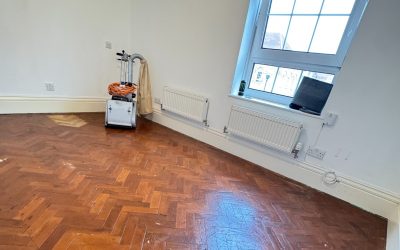
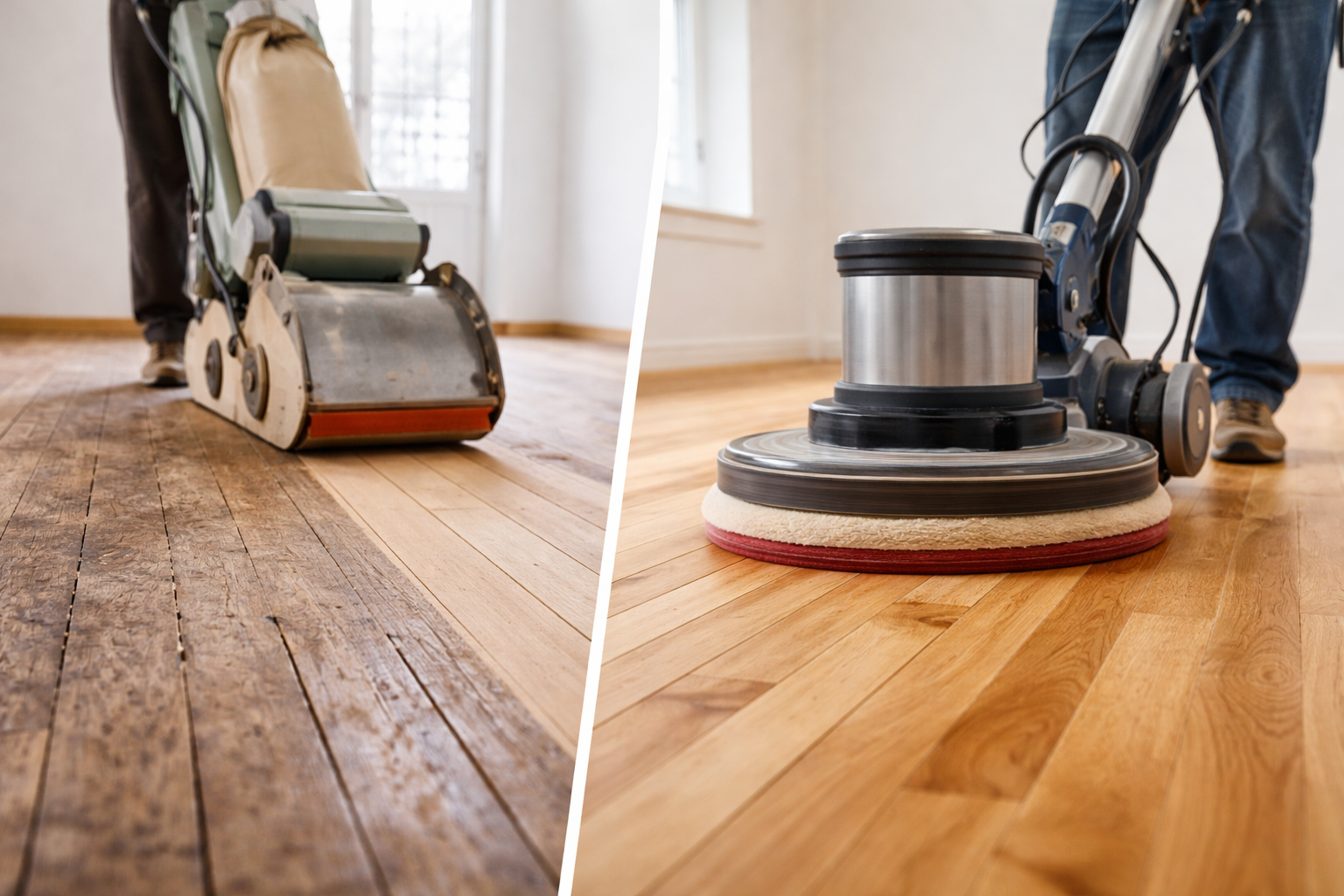
Sanding vs Buffing in Harrow: Which Service Does Your Wood Floor Really Need?
If your timber floor has lost its shine, picked up scratches, or started looking patchy in the busiest parts of the room, the next step is not always obvious. Some floors in Harrow only need a light abrasion and fresh top coat. Others need a full restoration right back to bare wood. At Harrow Floor Sanding, we help homeowners work out which approach is actually right for the condition of the floor, the type of finish already on it, and the level of wear the room sees every day.
For many local properties, especially 1930s semis, period homes with original pine boards, and busy family houses with pets, children and heavy hallway traffic, the difference between buffing and sanding matters. Choose the wrong process and you can spend money without solving the real problem. Choose the right one and you can extend the life of the floor, improve how it looks, and protect it properly for years. If you want a local assessment before deciding, you can always visit the home page or request a quote from the Harrow team directly.
The Short Answer: Buffing Maintains the Finish, Sanding Restores the Wood
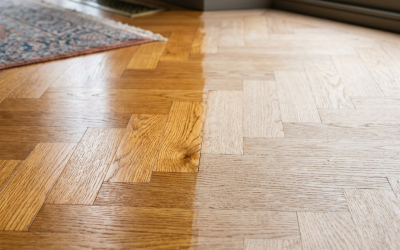
Buffing, often called a screen-and-recoat or abrade-and-recoat service, works on the existing protective finish. It lightly keys the top surface so a fresh coat can bond properly. This is usually the right option when the timber underneath is still in good condition and the main issue is dullness, light scuffing, minor surface scratches, or traffic-lane wear in the finish itself.
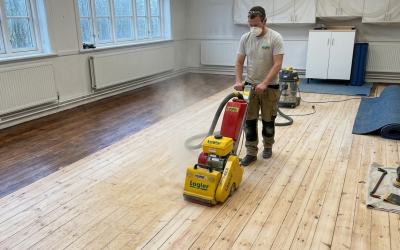
Full sanding is different. It removes the old finish entirely and takes the floor back to raw timber. That makes it the correct choice when the damage goes deeper than the top coat, when the floor is uneven, stained, badly scratched, previously coated with incompatible products, or when repairs, gap filling, colour changes, or a completely new finish system are needed.
In simple terms, buffing refreshes. Sanding resets.
What Is Buffing on a Wood Floor?
Buffing is not the same as polishing. In professional wood floor restoration, buffing normally means using a rotary buffer or similar machine with an abrasive screen or pad to lightly abrade the existing finish. The aim is not to cut deep into the timber. The aim is to prepare the surface so a new maintenance coat of lacquer or compatible finish can adhere correctly.
This process can work well when:
- the floor still has a sound, intact finish;
- there are no deep black stains, pet damage or severe water marks;
- scratches are mostly in the coating rather than the wood itself;
- the boards are stable and not excessively uneven or loose;
- the client wants to restore sheen and add protection without the disruption of a full sand.
It is especially useful on lacquered floors that have become tired in the main walking routes but have not yet worn right through to bare timber. In those cases, a professional recoat can delay the need for full restoration and protect the floor before the damage becomes structural or deeply cosmetic.
What Is Full Floor Sanding?
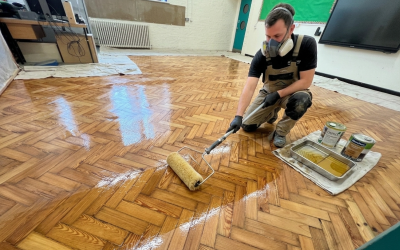
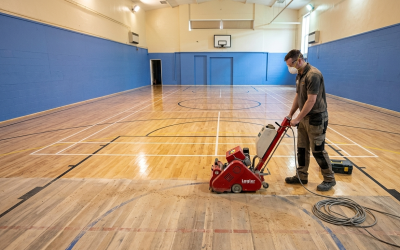
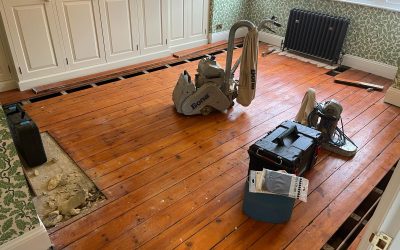
Full sanding is the more intensive restoration route. It uses a sequence of professional sanding machines and abrasives to strip away old coatings, flatten minor lipping, remove scratch patterns, refine the timber surface, and prepare it for sealing with a modern finish. In practical terms, this is the process used when you need genuine correction rather than maintenance.
A proper restoration usually includes:
- inspection of the existing finish and timber condition;
- moisture-content checks where needed;
- fixing loose or noisy boards;
- punching down nails and dealing with proud fasteners;
- local board replacement where damage is beyond repair;
- a structured grit sequence rather than a single pass;
- edge work and corner detail sanding;
- gap filling where appropriate;
- application of lacquer, oil or hardwax oil to suit the room.
For Harrow homes with original softwood boards, old parquet, heavy wear in hallways, or multiple layers of ageing varnish, this is often the only route that gives a clean, even, durable result.
When Buffing Is Usually the Right Choice
Buffing makes sense when the floor is fundamentally healthy and the problems are limited to the finish layer. Many homeowners leave this step too late. They wait until the coating has worn through, and by then a full resand is the only sensible option. Done at the right time, buffing can be a highly cost-effective maintenance treatment.
1. The Floor Looks Dull but Not Damaged
If the room has lost its lustre but still looks fairly uniform, the finish may simply be tired. A screen-and-recoat can revive the appearance without removing significant timber.
2. Scratches Are Light and Surface-Level
Fine scuffs from shoes, chair movement and daily traffic often sit in the top coat only. If you cannot see raw wood and there is no dark contamination in the scratches, a recoat may be enough.
3. You Want Preventative Maintenance
High-traffic areas such as hallways, living rooms and stair landings benefit from timely maintenance. Recoating before the finish fully fails can add years to the floor’s service life.
4. The Existing Finish Is Compatible
Where the current surface is a suitable lacquer system and has not been contaminated by waxes, silicone cleaners, oily residues or unsuitable polishes, buffing can be a smart route.
5. You Need Less Downtime
Because buffing does not strip the floor back to bare wood, it is normally less invasive than a complete sand. That can matter in busy Harrow households where access and disruption are important considerations.
When Buffing Is the Wrong Choice
This is where many DIY decisions go wrong. A buff and coat can sound attractive because it is lighter, quicker and often cheaper than full restoration. But on the wrong floor, it simply coats over underlying issues.
1. You Can See Bare Wood
If the finish has worn through in doorways, walkways or in front of kitchen units, buffing will not solve the problem. Once timber is exposed, it tends to absorb dirt and moisture unevenly. A new top coat over that sort of wear rarely produces an even finish.
2. There Are Deep Scratches, Dents or Black Stains
Damage that has penetrated into the wood fibre itself needs sanding, local repair, or board replacement. Buffing only treats the uppermost surface.
3. The Floor Has Cupping, Lipping or Unevenness
Where boards have movement, raised edges, mismatched repairs, or visible height differences, the job is no longer cosmetic maintenance. It needs a more complete restoration plan.
4. The Floor Has Been Treated with Wax, Polish or Unknown Products
Many older floors have years of supermarket cleaners, polish residues or incompatible maintenance products on them. These can interfere with adhesion and make a recoat risky. In those cases, sanding back to a sound base is usually safer.
5. You Want to Change the Colour or Finish Type
If you want to move from a dark, dated look to a natural pale tone, or from an old glossy varnish to a modern matt lacquer or hardwax oil system, full sanding is usually required.
Signs Your Harrow Floor Needs a Full Restoration
Some floors tell you very clearly that buffing is no longer enough. If you notice any of the following, you are usually looking at a sanding and restoration project rather than simple maintenance:
- patches of exposed timber in the main traffic lanes;
- grey, black or darkened staining in the wood;
- deep gouges from furniture, pet claws or old carpet gripper damage;
- loose parquet blocks or unstable floorboards;
- visible filler failure, open gaps or previous poor repairs;
- rough grain, splinters or worn edges to the boards;
- a floor that looks uneven from one side of the room to the other;
- old coatings flaking, peeling or reacting inconsistently.
These are common in older Harrow housing stock, particularly where original softwood boards have been hidden under carpet for decades and then exposed without proper restoration. They are also common where previous sanding was done poorly and left swirl marks, chatter, edge mismatch or finish failure.
The Harrow Property Factor: Why Local Floors Often Need More Than a Quick Recoat
Local context matters. Many floors in Harrow are not brand-new engineered boards with factory coatings. They are older floors that have lived several lives already. Victorian and Edwardian boards may have gaps, repairs, prior stain layers, or uneven wear. 1930s properties often have softwood subfloor boards upstairs that were never intended to be the final show surface, yet are now being restored as visible flooring. Parquet in halls and reception rooms may have loose blocks, old bitumen residue, or historic moisture-related movement.
That is why a proper inspection matters before recommending buffing. A floor may look simply dull at first glance, but once examined closely it may show cut-through finish, contamination, movement, or earlier DIY sanding mistakes. In those situations, a full restoration is not overkill. It is the correct professional route.
How Professionals Decide Between Buffing and Sanding
A specialist assessment should look at more than surface appearance. A proper recommendation usually considers:
- what finish is currently on the floor;
- whether the finish is still continuous or has failed in places;
- how deep the scratches and marks actually go;
- whether there are contamination issues from wax, polish or unsuitable cleaners;
- whether the client wants maintenance, repair, colour change or full visual transformation;
- the age, species and construction of the flooring;
- subfloor stability and moisture risk.
That is one reason posts like Wood Floor Sanding in Harrow: Restore Dull Boards the Right Way are helpful starting points, but a real decision still depends on the actual condition of your boards.
What a Full Restoration Can Fix That Buffing Cannot
When homeowners are deciding whether to spend more on sanding, it helps to understand what the additional work actually achieves.
Deep Scratch Removal
Sanding cuts below the damaged surface and removes the scratch pattern rather than merely reducing its visibility.
Board and Parquet Repairs
Loose sections, broken tongues, failed repairs and isolated damaged boards can be dealt with before finishing. This is particularly important for parquet floors, which need a stable base before recoating or sealing.
Gap Filling and Surface Refinement
Where suitable, small gaps can be resin filled and wider ones may require slivers or other repair methods. The Harrow site’s own pricing page distinguishes between resin filling for narrow gaps and reclaimed pine slivers for wider gaps, which is the sort of detail that matters in real restoration work.
Colour Correction
Old orange varnish, patchy stain build-up or inconsistent colour from historic repairs can only really be corrected once the floor is taken back and prepared evenly.
Finish Upgrade
A full sand gives you the option of choosing the right finish system for the room, whether that is a hard-wearing lacquer for family traffic or a hardwax oil look for a more natural aesthetic.
Buffing vs Sanding: Cost, Value and Timing
Buffing usually costs less than a full restoration because it is lighter work and uses fewer stages. But cheap is not the same as good value. If the floor really needs sanding, paying for a recoat first can become a false economy because the core issues remain and the floor still needs restoring later.
On the other hand, if your floor is still structurally sound and the finish has only started to tire, a timely buff and recoat can be excellent value because it delays major work and protects the wood before it is exposed.
The Harrow pricing page currently markets sanding-only and sanding-with-finish options separately, including upgrades for extra coats and hardwax oil systems. That reinforces an important point: not every floor needs the same treatment level, and not every quote should look identical. The right specification depends on the floor’s condition, the finish choice, and whether repairs or gap filling are required.
What About Parquet Floors?
Parquet deserves special mention because homeowners often underestimate how technical parquet restoration can be. Light surface abrasion may be appropriate for a well-maintained parquet floor with an intact finish, but many parquet floors need more than that. Loose blocks, adhesive failure, previous over-wetting, edge chipping and uneven wear are all common issues.
If that sounds familiar, read Harrow Parquet Floor Sanding: Repair, Re-Sand and Protect. It explains why parquet restoration is usually about more than simply improving shine. It is often about stabilising the floor first, then sanding accurately enough to preserve the pattern while removing wear.
Likewise, if you are dealing with a floor that has already had a poor repair or DIY attempt, this guide on common parquet restoration mistakes is worth reading before any work begins.
Finish Matters After the Decision
Whether your floor is buffed or fully sanded, the finish system still matters. A high-traffic family hallway may benefit from a durable modern lacquer. A bedroom or reception room where a more natural appearance is preferred may suit a quality hardwax oil system. The key is compatibility, preparation and correct application.
Professional-grade systems from established manufacturers are one reason specialist restoration tends to outperform quick DIY fixes. Bona’s recoat guidance is a good example of why properly prepared maintenance coats matter, while Osmo’s wood floor information is useful for understanding the role of hardwax oil finishes on interior timber floors. For broader technical expectations around sanding, finishing and maintenance, the NWFA remains a helpful reference point, and many contractors also work with systems such as Bona recoat treatments or Osmo Polyx-Oil depending on the project requirements.
So, Which One Does Your Floor Need?
Choose buffing when the finish is tired but intact, the wood underneath is sound, and you want maintenance rather than major correction.
Choose full sanding when the finish has failed, the timber is visibly damaged, the floor needs repairs or gap work, or you want a full visual reset with a new finish system.
If you are unsure, the safest route is not to guess from a distance or rely on a generic online checklist. Get the floor inspected properly. A professional can usually tell very quickly whether the problem is only in the coating or whether the timber itself now needs restorative work.
Final Thoughts
Sanding and buffing are both useful services, but they are not interchangeable. Buffing is a maintenance treatment for the right floor at the right time. Sanding is a full restoration process for floors that have gone beyond surface-level wear. Knowing the difference helps you avoid overspending, under-treating, or coating over problems that should have been fixed properly first.
If your floor in Harrow looks tired, scratched, patchy or worn through, a local assessment will give you a much clearer answer than guesswork. Some floors genuinely only need a careful recoat. Others need a complete restoration to look right and last properly.
To discuss the best route for your property, visit Harrow Floor Sanding, review the service information, or request a quote for an on-site inspection. A proper diagnosis now usually saves time, money and disappointment later.