
Key Takeaways
- Victorian pine requires a careful grit sequence starting with 40-grit Zirconia for uneven boards.
- Gap filling is essential for draughtproofing; choose between resin-mixed sawdust or reclaimed pine slivers.
- Bona Traffic HD provides the ultimate protection for high-traffic hallways while preserving the heritage look.
- Ensure moisture content is below 12% before applying any water-based finishes to avoid grain raising.
Many homeowners in Harrow are fortunate enough to live in properties with original Victorian timber floorboards. However, after decades of being hidden under carpets or neglected, these heritage floors often appear tired, damaged, and riddled with gaps. The draughts alone can significantly impact your heating bills, while the aesthetic value of the property remains suppressed by worn-out timber.
The Agitation: Why Standard Sanding Isn’t Enough
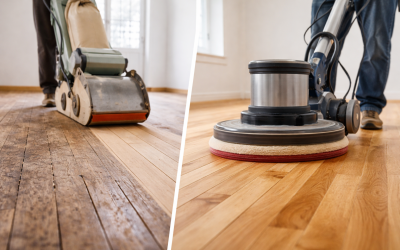
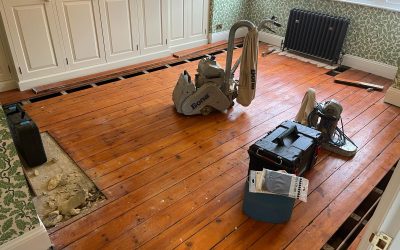
It is a common mistake to hire a general builder or attempt a DIY sand with rental equipment. Victorian pine is soft and often uneven due to ‘cupping’ or ‘crowning’ over the last century. Using the wrong grit or an unbalanced machine like a cheap drum sander can lead to deep gouges and ‘chatter marks’ that are nearly impossible to remove. Furthermore, the lack of professional dust extraction means fine particles will permeate your soft furnishings, wallpaper, and even the electronics throughout your Harrow home.
Without the correct heritage restoration approach, you risk stripping away too much of the wearing layer, shortening the lifespan of your floorboards. Moreover, failing to address the structural issues such as loose joists or improper gap filling leads to a floor that creaks and remains thermally inefficient.
The Solution: Specialist Floor Sanding in Harrow
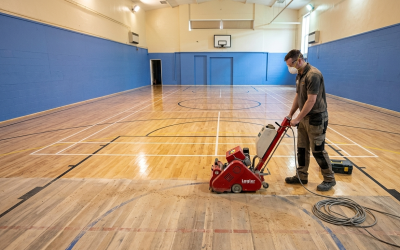
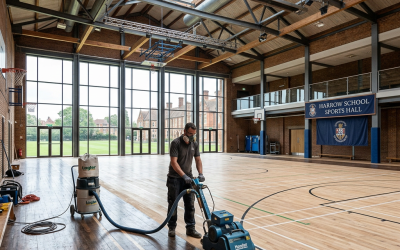
As specialists in Floor Sanding London, we employ a meticulous restoration process designed specifically for period properties. Our approach combines traditional craftsmanship with the latest dust-free technology from manufacturers like Lagler and Bona.
Pro-Tip: The Grit Sequence for Victorian Pine
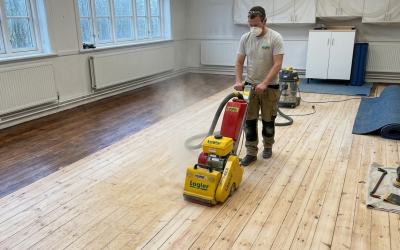
When dealing with heavily soiled or uneven Victorian pine, we typically start with a 40-grit Zirconia abrasive on our Lagler Hummel belt sander. Zirconia is preferred over standard aluminium oxide because it stays sharper for longer, cutting through old Victorian bitumen or lead-based paints efficiently without clogging. We then progress through 60, 80, and finally 100 or 120-grit for a glass-smooth finish. For the edges, the Bona Edge or Festool ROTEX ensures we reach every corner without leaving swirl marks.
Heritage Gap Filling: Resin vs. Slivers
In Harrow restoration projects, gap filling is a critical stage. For smaller gaps (under 3mm), we use a high-quality resin like Bona Mix & Fill, blended with the fine ‘flour’ from the 80-grit sanding stage to ensure a perfect colour match. For larger heritage gaps, we recommend hand-gluing reclaimed pine slivers. This provides a structural fix that moves with the timber, preventing the filler from falling through the floorboards over time.
Before any finish is applied, we conduct a moisture content check. In the UK’s humid climate, particularly in older properties, ensuring the timber is stable is paramount. If we notice potential ‘tannin pull’ or want to enhance the grain, we might perform ‘water popping’—a technique where we lightly mist the floor to open the wood pores, allowing the stain or seal to penetrate deeper and more evenly.
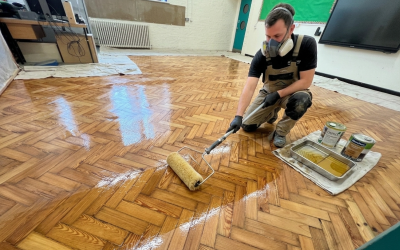
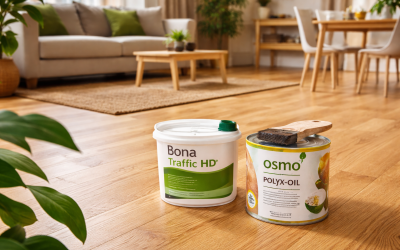
For the final protection, we often recommend Bona Traffic HD. This water-based lacquer offers unparalleled durability and is touch-dry in just 2-3 hours, with full curing taking significantly less time than traditional oils. It is also low-VOC, ensuring your home remains safe for your family and pets. For those seeking a more traditional matte look, Osmo Hardwax Oil is an excellent alternative, though it requires careful monitoring of UK humidity levels during the 8-12 hour curing window between coats.
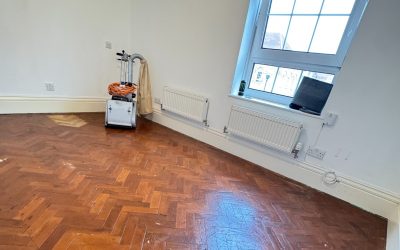
Restoring your heritage floorboards is an investment in your property’s value and comfort. By choosing specialist tradesmen who understand the nuances of Victorian timber, you ensure a finish that will last for generations. Check out our previous guide on choosing the right wood finishes for more detailed comparisons.